Twitter: latamthought- Colombia, known for its coffee worldwide, begins campaign to increase below-average levels of domestic consumption http://bit.ly/96zAW6 about 12 hours ago from TweetDeck
- Evo Morales will meet with new Uruguayan President Jose Mujica to talk about potential Bolivian port in Uruguay http://bit.ly/cIdZZL 07:00:27 AM March 09, 2010 from TweetDeck
- Julia Sweig on Secretary of State's visit to Brazil: http://www.tinyurl.com/yfdd8xh 08:21:48 PM March 08, 2010 from TweetDeck
- LatAmThought post on AQBlog argues that in Colombia's elections not being disliked may be as important as being liked. http://bit.ly/aNeHTZ 08:14:30 AM March 06, 2010 from TweetDeck
- Latin Americans don't care what the U.S. thinks. http://bit.ly/d3sRoV 08:25:40 AM March 03, 2010 from TweetDeck
Categories
Blogroll
- Americas Quarterly Blog
- Babalu
- Bloggings by boz
- Caracas Chronicles
- Desde el Principio
- Gancho Blog
- Latin American Politics
- Latinoamerica Blog
- LatIntelligence
- M3 Report
- Machete
- Mexico Monitor
- Plan Colombia and Beyond
- Security in Latin America
- Sociología para novatos
- The Cuban Triangle
- The Latin Americanist
- This is for the Mara Salvatrucha
- Two Weeks Notice
- U.S. Office on Colombia
-
Recent Comments
Tags
Alvaro Uribe Amazon ARENA Barack Obama Black Markets border issues Brazil Cartels China ciudad juarez civil society Congress cristina fernandez de kirchner democracy Diplomacy drug war elections ELN Energy Evo Morales FARC Fernando Lugo finance FMLN Free Trade Honduras Hugo Chavez Human Rights Manuel Zelaya media Nationalization Nation Branding Oil policy Political Unrest Protests PSUV Rafael Correa Raul Castro Raul Reyes Roberto Micheletti Russia security United States war on drugs
Tag Archives: elections
Why Not Being Disliked is as Powerful as Being Liked
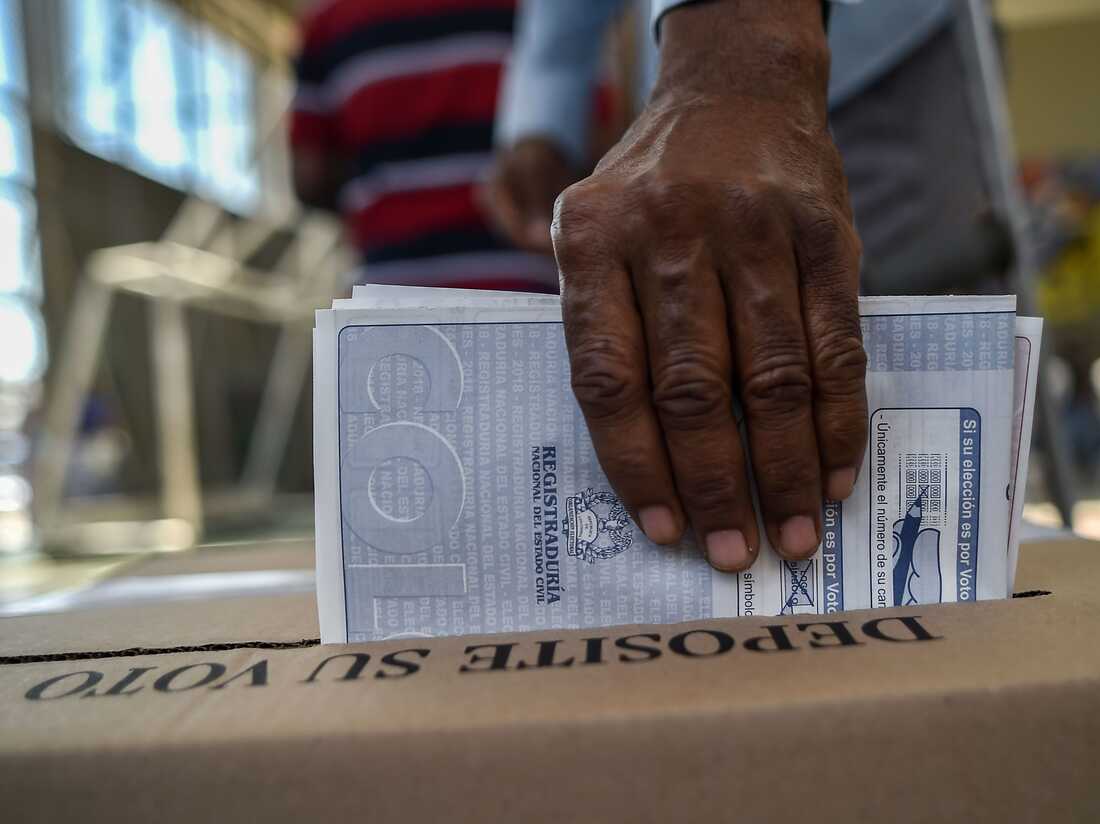
I recently wrote an article for the Americas Quarterly blog in which I argued that in Colombia’s second round of elections for the presidency not being disliked may be even more of a deciding factor than being liked by voters.
Campaign Season in Colombia
Colombian President Álvaro Uribe and his allies were already taking candidate-like precautions before [...]
Posted in Colombia Also tagged Alvaro Uribe, Americas Quarterly, Andres Felipe Arias, Gustavo Petro, Juan Manuel Santos, Noemi Sanin, Rafael Pardo, Sergio Fajardo Leave a comment
Disheartening Aspects of Colombia’s Congressional Elections
Some things may be comical when you see them in movies, yet somewhat worrying when they are part of the democracy you count on.
Such is the case with María Fernanda Valencia, Candidate for the Partido de la U, who made it to the front cover of the Colombian magazine Soho (a classier version of the [...]
Posted in Colombia Also tagged Alvaro Uribe, Aura Cristina Geithner, Maria Fernanda Valencia, Nicolas Uribe, Santiago Morales Leave a comment
Election Season in Colombia
The Constitutional Court’s ruling last night blocking the possibility of President Uribe’s reelection lifted a weight off the country’s shoulders. Even Uribe, who found out about the Court’s decision through his Blackberry at a a press conference about health reform in Barranquilla, reacted with a nervous smile.
Many Colombians, who heard the news over television and radio waves [...]
Posted in Colombia Also tagged Alvaro Uribe, Andres Felipe Arias, German Vargas Lleras, Gustavo Petro, Juan Manuel Santos, Noemi Sanin, Rafael Pardo, Sergio Fajardo Leave a comment
Investigative Journalism in Colombia
Many of our readers are likely already aware of last week’s announcement of the end of Cambio, perhaps Colombia’s most important source for investigative journalism. While the Casa Editorial El Tiempo, which owns Cambio, claims that the decision to turn this weekly investigative magazine into a monthly magazine on tourism and travel reflects market trends, the magazine’s [...]
Venezuelan Influence in Nicaraguan Media
Another opposition media outlet has fallen. And it’s not in Venezuela.
Albanisa, a Venezuelan-owned conglomerate that controls below market-value Venezuelan oil imports in Nicaragua and has business ties to Nicaraguan President Daniel Ortega, recently announced the formal purchase of Canal 8, a leading anti-Ortega media outlet, for US$10 million. The deal, which went through in December [...]
Election Watch in Brazil: Female Candidates at the Fore
The presidential elections are a little over a year away in Brazil, and the campaigns are beginning to heat up. This week, Epoca Magazine announced that the former Minister of the Environment, Marina Silva, is running for president, making the race all the more interesting. Considering Brazil’s role as one of the new economic world [...]
Honduras should open our eyes to discontent with democracy in the region
Within 48 hours of the coup in Honduras, much has been written about what this means for Latin America, with the best analysis acknowledging that the coup breaks with the democratic constitutional order, but also that Honduran President Manuel Zelaya threatened democracy in his campaign to perpetuate himself in power. Chris Sabatini from the Council [...]
Posted in Honduras Also tagged democracy, Honduras, Manuel Zelaya, Political Unrest, Roberto Micheletti 4 Comments
A Silver Lining in the Cloud
Mounting political tensions in Honduras finally spilled over on 28 June 2009, the day the nation was set to vote on the “cuarta urna“, a proposal from back in March that, if successfully passed, would have allowed for Hondurans to vote to change the constitution to allow incumbent President Manuel Zelaya to run for re-election [...]
Posted in Honduras, Latin America Also tagged democracy, Honduras, Manuel Zelaya, Political Unrest, Roberto Micheletti Leave a comment
El Salvador and U.S. dependence
It has become a cliché to say that Latin America is no longer the United States’ backyard. An Inter-American Dialogue report that came out yesterday mentions “[t]he growing assertiveness and independence of Latin America and the Caribbean,” as well as the “declining ability of the United States to exert authority and shape outcomes in the [...]

How To Vote in Colombia